
The Hidden Dangers of SMS Traffic Pumping
Understand how SMS traffic pumping works, its hidden cost impacts, early attack indicators, and how inbound WhatsApp authentication eliminates the risk.
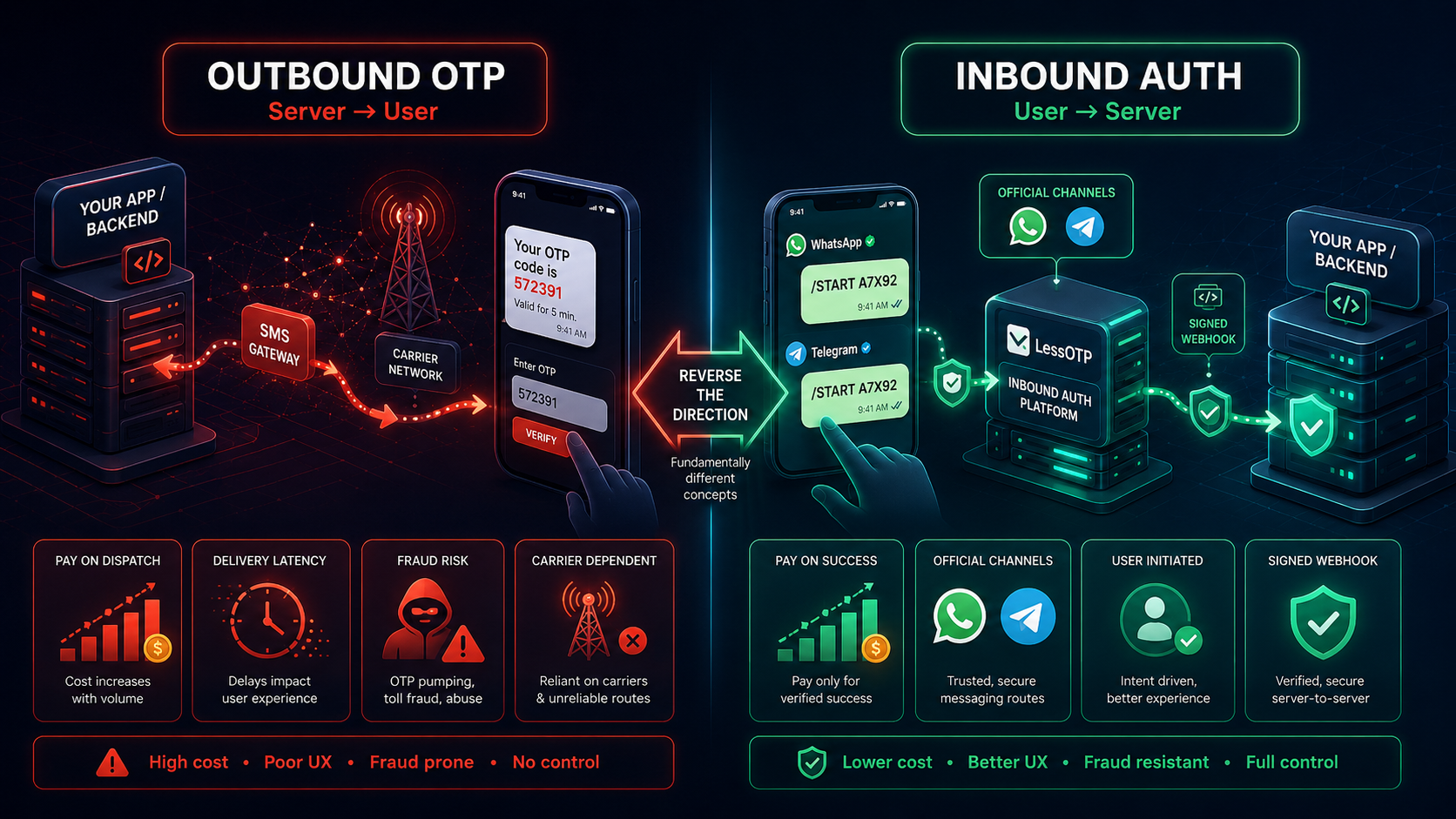
What is SMS traffic pumping (AIT)?
SMS traffic pumping, also called Artificially Inflated Traffic (AIT), is a form of International Revenue Share Fraud (IRSF). Attackers exploit login, registration, or password-reset forms to trigger thousands of SMS OTP requests to premium number ranges or specific mobile network operators.
In this scheme, attackers and complicit intermediaries share revenue from expensive international SMS termination fees, while your business pays the full delivery bill for messages that no legitimate user ever opens.
The real impact: runaway costs and collapsing conversion
Uncontrolled Cost Spikes
A bot attack lasting only a few hours can send tens of thousands of messages to expensive international routes, creating a large bill without adding a single active user.
Broken Conversion Metrics
Verification conversion drops sharply because OTPs are sent to bot-controlled numbers that never submit a valid token in your application.
Damaged Sender Reputation
Abnormal outbound volume can trigger throttling, aggregator spam flags, or blocks on the legitimate SMS routes your product depends on.
Server and Database Load
Automated requests consume API capacity, exhaust database connection pools, and fill OTP tables with tokens that will only expire.
Early warning signs of SMS pumping
| Indicator | Suspicious pattern | Immediate action |
|---|---|---|
| New Country Prefixes | SMS requests suddenly spike toward country codes outside the application's target markets. | Restrict geographic permissions and block international routes you do not operate in. |
| OTP Completion Rate Drops | OTP requests rise while validated token submissions fall close to zero. | Apply strict rate limits by IP and device, then add a bot challenge at the request boundary. |
| Sequential Number Patterns | OTP requests target consecutive phone-number ranges with only a few changing digits. | Apply exponential cooldowns by network source and destination prefix. |
Why inbound WhatsApp removes the root cause
SMS OTP is exposed because it uses an outbound push architecture: anyone who submits your public form can force your server to send a billable message.
LessOTP reverses this into inbound pull verification:
- No billable outbound SMS: Verification starts when the user sends a /START code message from their own WhatsApp account.
- The sender initiates the message: Bots cannot drain your SMS balance because your platform does not send a paid OTP for every form submission.
- Billing only on success: LessOTP deducts credit for a valid production verification, not for code requests or pending messages.
Test the inbound flow in staging
You can validate the inbound architecture before migrating from SMS. Create a staging App, use its staging API key, and call this request endpoint:
curl -X POST https://lessotp.com/api/v1/staging/auth/request \
  -H "Authorization: Bearer YOUR_STAGING_API_KEY" \
  -H "Content-Type: application/json" \
  -d '{
    "channel": "whatsapp"
  }'
Code request response:
{
  "status": "success",
  "data": {
    "request_id": "req_8f7d6c5b4a",
    "unique_code": "A7X92",
    "channel": "whatsapp",
    "wa_link": "https://wa.me/628999999999?text=/START+A7X92",
    "expires_in": 180,
    "mode": "frictionless"
  }
}
Use Dashboard → Simulator to generate an inbound event without sending a real WhatsApp message. Your App webhook URL receives a verified payload:
{
  "event": "verification.success",
  "channel": "whatsapp",
  "request_id": "req_8f7d6c5b4a",
  "phone_number": "6281234567890",
  "timestamp": "2026-08-24T10:00:00Z"
}
Validate webhook signatures in your backend
Protect your webhook endpoint by validating the X-Signature header and using Idempotency-Key so a replayed event cannot trigger the same login twice.
import { createHmac, timingSafeEqual } from "node:crypto";

function verifyLessOTPWebhook(rawBody: string, signature: string, secret: string) {
  const expected = createHmac("sha256", secret).update(rawBody).digest("hex");
  const received = Buffer.from(signature, "hex");
  const expectedBuffer = Buffer.from(expected, "hex");

  return received.length === expectedBuffer.length &&
    timingSafeEqual(received, expectedBuffer);
}

// Simpan Idempotency-Key dan abaikan delivery yang sudah pernah diproses.
See the error-code contract and webhook retry behavior in the LessOTP developer documentation.
Protect your authentication budget from SMS pumping
Move to inbound WhatsApp authentication. Test LessOTP's Staging Simulator in minutes without exposing your budget to fraudulent outbound SMS traffic.
Open Staging Simulator