
Outbound OTP vs Inbound Auth: Fundamentally Different Concepts
Understand the fundamental differences between outbound SMS OTP and LessOTP inbound authentication across message direction, cost, UX, delivery, and fraud risk.
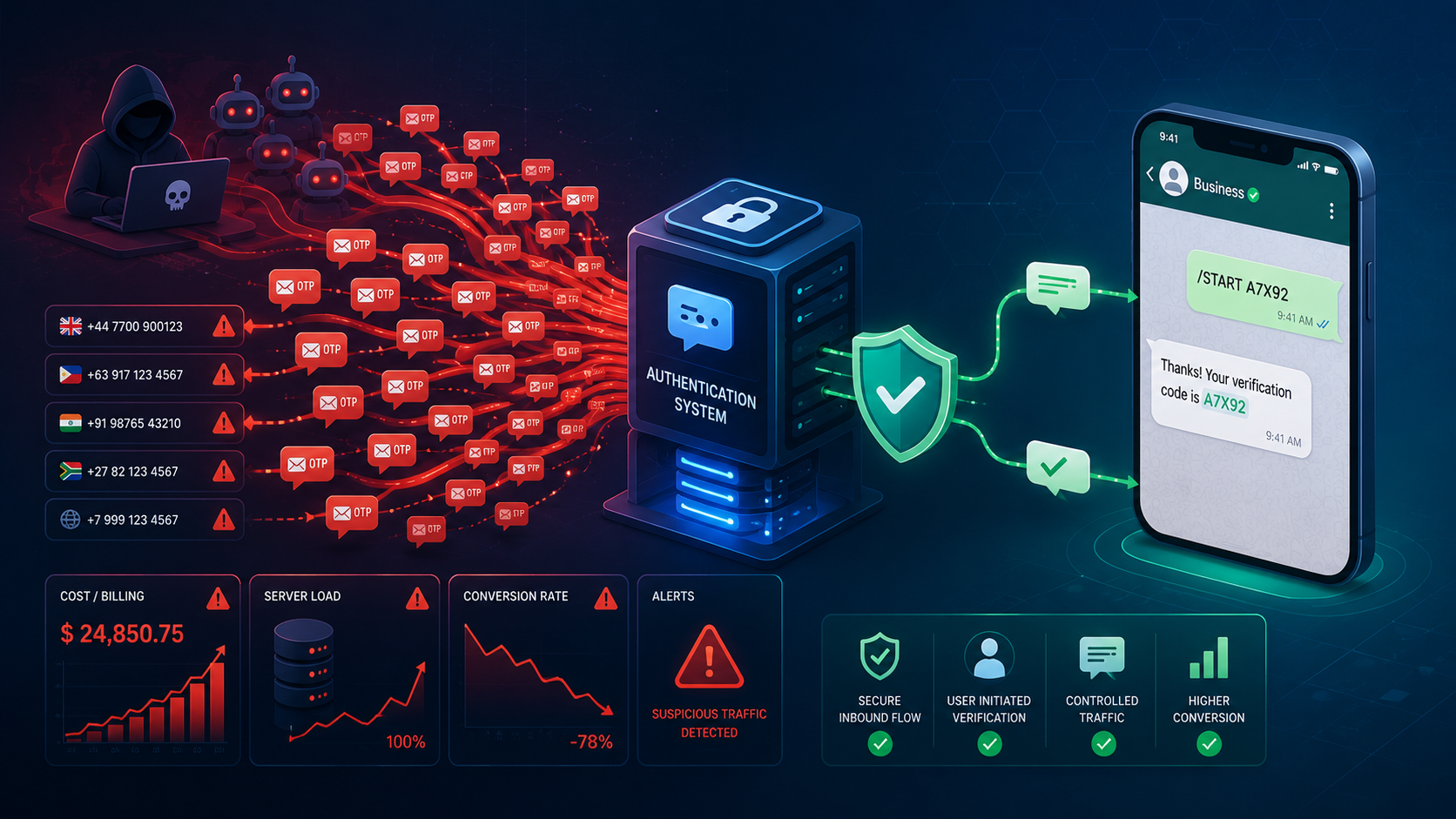
Outbound OTP vs Inbound Auth: Reversing Message Direction Changes Everything
Most developers are used to the legacy pattern: your application asks for the user's phone number, stores a random token, and calls an SMS gateway to dispatch the message outward (outbound).
Inbound authentication is not just another delivery channel. It represents a fundamental architectural inversion: the user sends the verification message inbound to the official platform. This reversed direction completely changes the cost structure, delivery reliability, and security model.
Fundamental Architectural Differences: Outbound vs Inbound
| Architectural Aspect | Outbound OTP (Legacy Pattern) | Inbound Auth (LessOTP) |
|---|---|---|
| Message Direction | Server → User (Outbound) | User → Server (Inbound) |
| Cost Trigger Point | Your app pays for every outbound dispatch regardless of outcome | Credit is deducted strictly upon successful production verification |
| Telco Carrier Dependency | High (subject to aggregator routing delays and operator spam filters) | Low (delivered over official WhatsApp / Telegram data protocols) |
| End-User UX | Wait for SMS → read OTP → type digits into web form | Tap button → open messaging app → send prefilled command |
| Toll Fraud & Pumping Risk | High (attackers automate dispatches to premium foreign destinations) | Zero for outbound SMS (no outbound SMS pipeline exists to exploit) |
| Backend Delivery | App backend verifies code strings submitted via web form | App backend receives signed HMAC SHA-256 webhooks |
3 Inherent Flaws of the Outbound Model
1. Paying Upfront with No Guarantee of Conversion
In the outbound model, you pay the carrier upon dispatch, not upon successful authentication. Messages that are dropped, delayed, or never verified still consume your budget.
2. Telco Delivery Latency Bottlenecks
Carrier networks frequently suffer traffic congestion during peak hours or trigger aggressive carrier spam filters, causing OTPs to arrive after users give up.
3. Attack Surface for Bot Toll Fraud
Any public endpoint that triggers outbound messages becomes a prime target for automated bots executing International Revenue Share Fraud (IRSF).
Why Inbound Is Structurally Superior
Reversing the message flow from User to Server produces immediate structural advantages:
- Action-Based Verification: The inbound message proves the user actively initiated the flow from a verified messaging account.
- Elimination of SMS Toll Fraud: Without outbound SMS dispatches, the attacker's monetization model collapses.
- Official Partner Infrastructure: WhatsApp runs through Official WhatsApp API Business Partner Kirimdev, and Telegram runs via the official Bot API.
- Automated Webhook Delivery: Your backend receives verified identity payloads through HMAC-signed webhooks with built-in idempotency.
Leave legacy outbound OTP complexity behind
Adopt modern inbound authentication today. Test WhatsApp and Telegram verification flows in the LessOTP staging sandbox for free.
Test Inbound Auth in Staging